

The Evolving Counterfeit Threat Landscape
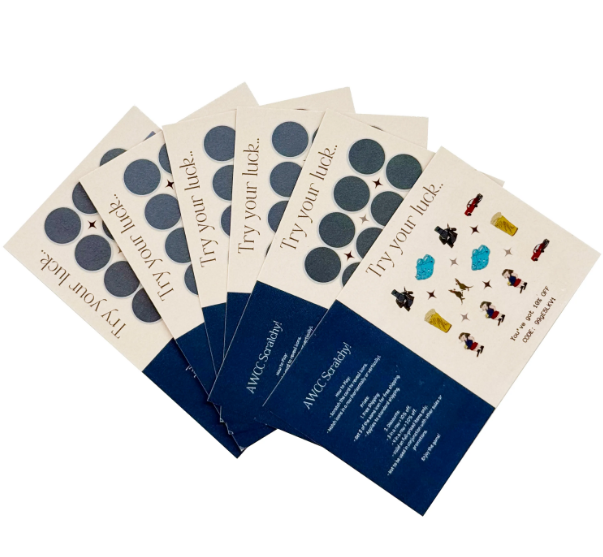
Counterfeiting is not a static problem. As security technologies advance, counterfeiters adapt with increasingly sophisticated methods. The global trade in counterfeit goods is estimated to represent a significant percentage of world trade, and printed security documents—including scratch-off cards, lottery tickets, and promotional materials—remain prime targets.
The stakes are particularly high for scratch-off cards and lottery tickets. A successful counterfeit operation can undermine consumer trust, defraud legitimate businesses, and expose brands to regulatory penalties. The challenge for security printers is to stay ahead of counterfeiters through continuous innovation in materials, processes, and verification technologies.
ISO 14298: The Security Printing Standard
The security printing industry has a recognized benchmark: ISO 14298, the standard for management of security printing processes. This standard establishes requirements for security management systems in organizations that manufacture value documents such as banknotes, passports, credit cards, checks, and identity documents. It has been extended to cover scratch cards, lottery tickets, ballot papers, certificates, and other secure documents.
ISO 14298 certification demonstrates that a manufacturer has implemented rigorous security controls across the entire production chain—from raw material procurement through to finished goods distribution. The certification is available at different levels, including Fundamental and Governmental levels, depending on the sensitivity of the documents being produced.
For brands sourcing scratch-off cards or lottery tickets, working with an ISO 14298-certified manufacturer provides an independent verification of security capabilities. It's not a guarantee against counterfeiting—no single standard can provide that—but it does indicate that the manufacturer follows industry-recognized best practices for security management.
Holographic and Optically Variable Features
Holographic security features have become a mainstay of anti-counterfeit printing, and for good reason. They are visually striking, difficult to replicate without specialized equipment, and readily verifiable by consumers without any training.
In scratch-off card applications, holographic elements can be integrated directly into the scratch-off layer itself. These holographic scratch-off devices combine the functional requirement of a removable coating with the security benefits of optically variable effects. When a player scratches the coating, they reveal not just the underlying information but also a holographic effect that's nearly impossible to counterfeit.
The technology has evolved significantly. Modern holographic scratch-off layers can incorporate partial demetallization to create complex visual effects that are both attractive and secure. Some implementations use copper-based holographic layers as an alternative to traditional aluminum, offering different visual characteristics that can be customized for specific brand requirements.
Variable Data Printing and Serialization
Variable data printing has transformed security printing by enabling each individual item to carry unique, machine-readable identifiers. This capability is essential for modern anti-counterfeit strategies.
The application of variable data to scratch-off cards involves printing unique codes, serial numbers, or QR codes beneath the scratch-off coating. These identifiers serve multiple security functions:
● They enable individual card tracking through the supply chain
● They provide a verification mechanism at the point of redemption
● They allow brands to detect patterns of counterfeit activity
● They facilitate consumer engagement through digital verification
The printing of variable data requires specialized equipment capable of high-speed, high-accuracy digital printing. Kodak Prosper Variable Data Printing systems are commonly used for this application, delivering the precision needed for small-character printing beneath scratch coatings. Haoge's production lines integrate these systems with automated inspection to verify each code's readability and accuracy.
Covert and Forensic Security Features
Not all security features are visible to the naked eye. Covert features are designed to be detectable only with specialized equipment, providing an additional layer of protection that counterfeiters may not even know exists.
Micro-text printing involves printing text so small that it's illegible without magnification. This is extremely difficult to replicate on counterfeit products because it requires printing equipment with resolution capabilities beyond what most counterfeiters possess.
UV and infrared inks are invisible under normal lighting but become visible under specific wavelengths of light. These can be used to print hidden marks, codes, or patterns that authenticate the document.
Chemical taggants can be incorporated into inks or coatings at the molecular level. These taggants are detectable only with specialized analytical equipment, providing forensic-level authentication that can withstand sophisticated attacks.
The combination of overt features (visible to everyone), covert features (detectable with basic tools), and forensic features (detectable only in a laboratory) creates multiple layers of security that make counterfeiting progressively more difficult and expensive.
Integrated Security Workflows
Technology alone isn't enough. The most effective anti-counterfeit solutions integrate security into every stage of the production workflow.
Secure printing workflows typically include:
● Controlled access to production areas
● Segregation of different production stages to prevent unauthorized access to sensitive materials
● Automated inspection at multiple points to detect anomalies
● Full traceability from raw materials to finished goods
● Secure data management for variable information
|
Security Layer |
Technology |
Verification Method |
|
Overt |
Holographic effects, color-shifting inks |
Visual inspection |
|
Covert |
Micro-text, UV inks |
Magnification, UV light |
|
Forensic |
Chemical taggants, DNA markers |
Laboratory analysis |
|
Digital |
Serialization, QR codes |
Database verification |
Haoge's manufacturing facilities implement secure workflows that include ERP and MES production management systems, ensuring full traceability and controlled access throughout the production process. The company's experience with variable data management and secure printing workflows spans thousands of projects across multiple industries.
The Role of Automation in Quality and Security
Automated inspection systems have become essential for maintaining both quality and security in large-scale production. These systems use optical sensors, cameras, and machine vision algorithms to verify print accuracy, coating consistency, and security feature integrity.
The inspection process typically includes:
● Verification of variable data codes for readability and correctness
● Detection of printing defects that could indicate tampering
● Confirmation of security feature presence and integrity
● Documentation of inspection results for each production batch
Automation doesn't replace human expertise—it augments it. The inspection data provides production teams with real-time feedback that enables rapid correction of issues before they become widespread. It also creates an audit trail that can be used for quality investigations and regulatory compliance.
Practical Considerations for Brands
For brands sourcing scratch-off cards or other printed security documents, the choice of manufacturing partner matters enormously. Technical capabilities are important, but so is the manufacturer's commitment to security culture and continuous improvement.
Key questions to ask potential suppliers:
What security certifications do they hold (ISO 14298 or equivalent)?
How do they manage variable data to prevent unauthorized access?
What automated inspection systems do they use?
How do they handle secure destruction of rejected materials?
What is their track record for on-time delivery without security incidents?
The best security printers treat security as a core competency, not an add-on service. They invest continuously in new technologies and train their staff to recognize and respond to emerging threats.
Haoge Anti-Counterfeit has been serving global clients for over 25 years with security printing solutions that include scratch-off labels, lottery tickets, promotional scratch cards, and anti-counterfeit labels. The company's two manufacturing facilities and dedicated R&D team ensure continuous innovation in security printing technologies.
Looking for a security printing partner that understands the latest anti-counterfeit technologies? Haoge Anti-Counterfeit delivers integrated security printing solutions with full production traceability and quality control. Contact the engineering team to discuss your security requirements.
Table of Contents
- The Evolving Counterfeit Threat Landscape
- ISO 14298: The Security Printing Standard
- Holographic and Optically Variable Features
- Variable Data Printing and Serialization
- Covert and Forensic Security Features
- Integrated Security Workflows
- The Role of Automation in Quality and Security
- Practical Considerations for Brands
 EN
EN