


What Actually Changes When a Press Switches to Variable Data
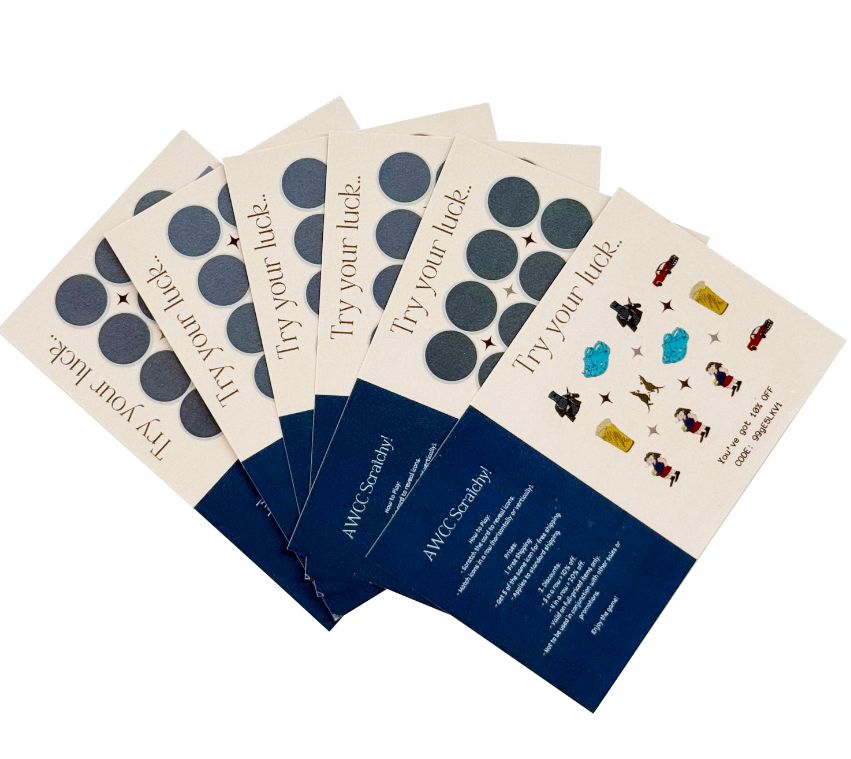
Variable Data Printing, often called VDP, transforms a static stack of scratch-off cards into a collection of individually unique pieces, each carrying distinct information inside. Conventional offset printing uses fixed plates to reproduce identical graphics and text across the entire run. VDP, by contrast, swaps text, serial numbers, barcodes, and even graphic elements without ever stopping the press. High-speed digital systems, including the Kodak Prosper and HP Indigo lines, can run at over 400 feet per minute while generating exclusive serial codes, personalized names, or region-specific discount strings in real time. Production data is pulled from structured CSV databases, and the printheads adjust ink droplet placement to match each customer record, creating differentiated marketing effects that a static plate simply cannot deliver.
Serialization as the Engine of Personalization
Unique serial codes form the backbone of any personalized scratch-off campaign. Each code links to an independent database record that can hold customer profiles, purchase history, and regional tags. A Southeast Asian coffee chain running a loyalty program across 1,200 stores provides a clear illustration. Every scratch-off sticker carried a code tied to a specific store location, a production batch, and a reward tier. After customers scratched and redeemed their rewards, the point-of-sale system captured operational data right down to individual store traffic and conversion rates. That level of unit-level tracking remains out of reach when the entire promotion relies on a single static code printed on every card.
Beyond Names: Making Rewards Match Customer Data
Printing a customer’s name on a scratch-off card creates a moment of recognition, but the deeper marketing value comes from dynamic reward logic shaped by customer segmentation. A cosmetics brand applied VDP to run three reward tiers inside a single production batch. The tier assignment was driven by customer lifetime value data stored in the brand’s database. High-value customers uncovered premium gift sets, while newer buyers received codes for a second-purchase discount. The scratching motion felt identical for everyone, but the differentiated benefits lifted redemption rates noticeably above what previous static promotions had achieved.
|
Feature |
Static Printing |
Variable Data Printing |
|
Code uniqueness |
One code for the entire batch |
Every unit gets a unique code |
|
Personalization capacity |
None |
Custom name, reward tier, region |
|
Campaign data depth |
Only aggregate totals |
Individual unit tracking |
|
Data security requirement |
Minimal |
Encrypted closed-loop pipeline |
|
Relative unit cost |
Lowest |
Moderate |
The Data Security Risks Unique to Variable Workflows
When every printed piece carries personalized data, the security perimeter expands far beyond what a static run demands. Unauthorized code leakage can happen during file transfer, on a print server cache, or even at the post-print inspection stage. Effective defenses stack multiple layers: encrypted file transfer through SFTP or AES-256, air-gapped print servers running on isolated VLANs, and database access governed by least-privilege policies. An audit of a mobile carrier’s prepaid card production once revealed a risk hiding in the temporary pre-press database, where full read permissions had been left open across two shifts. No actual data breach occurred, but the gap confirmed that continuous permission management needs to stay active through the entire production cycle, not just at setup.
Bridging the Physical Scratch-Off to a Digital Redemption Backend
A personalized scratch-off piece only completes its job when the backend redemption system recognizes its unique code. Before finished goods leave the factory, the code manifest must sync with the brand’s marketing platform, ERP, or a custom redemption API. Systems built on Salesforce Marketing Cloud, for instance, can ingest a flat file mapping code IDs to campaign rules with a single upload. When the data handshake is smooth, invalid code complaints drop and customer service tickets stay low. Any mismatch, however, turns a clever personalization tactic into a frustrating experience where legitimate winners cannot claim their rewards.
Where Variable Data Printing Delivers the Strongest ROI
Variable Data Printing is not a universal fit for every promotion. Extremely small batches and blanket rebates often do not justify the setup overhead. The strongest return comes when the campaign’s goal shifts from mass distribution to targeted engagement, where each scratch-off card becomes a data-rich conversation starter. For brands that need this level of precision at scale, working with a manufacturer that has dedicated variable data management experience, secure digital press workflows, and full production traceability, like Haoge, keeps the bridge between the physical card and the digital backend solid from the first print to the final redemption.
Table of Contents
- What Actually Changes When a Press Switches to Variable Data
- Serialization as the Engine of Personalization
- Beyond Names: Making Rewards Match Customer Data
- The Data Security Risks Unique to Variable Workflows
- Bridging the Physical Scratch-Off to a Digital Redemption Backend
- Where Variable Data Printing Delivers the Strongest ROI
 EN
EN